
Boreal Technology Hub Application
Please note: The TransAlta Data Centre Application is now the Boreal Technology Hub Application. If you bookmarked the old page or followed an older link, you're in the correct location.
Project Update: The submission of a development application is anticipated in the coming months by BGRE on behalf of Brookfield and CPP Investments for a Data Processing Facility located at TransAlta’s Keephills site, known as the Boreal Technology Hub.
What are the Next Steps?
Upcoming Open House
Where: Keephills Community Hall 15 - 51515 Range Road 32A Keephills, AB T0E 0N0
When: October 7, 2026 from 3:00 to 7:00 p.m. This is a drop-in event.
Learn more about the project and open house at www.borealtechnologyhub.com.
A public open house, hosted by BGRE, is scheduled to present the overall development concept, including stripping and grading activities. The open house will provide an opportunity for residents, landowners, businesses, Indigenous communities, and other interested parties to learn more about the proposed development, ask questions, and provide feedback. The applicant is required to provide a "What We Heard Report" as part of any development proposal which will help inform the County's review process. We encourage interested residents to participate in available public engagement opportunities, as this allows you to ask questions and ensure your input forms part of the "What We Heard Report.”
The submission of a development application is anticipated in the coming months by BGRE on behalf of Brookfield and CPP Investments for a Data Processing Facility located at TransAlta’s Keephills site.
Any future development proposal will require approval of a Master Site Development Plan (MSDP) and Development Permit prior to construction. These applications will be subject to:
- Public feedback
- County review and consideration of technical studies
- Applicable municipal policies and regulations
- Agency comments including Alberta Environment and Alberta Transportation
- Input from Indigenous Groups
- Input from adjacent municipalities
Parkland County will share more details as the application progresses – please subscribe to this page to stay informed.
2025
Area Structure Plan and Land Use Bylaw Amendments Approved
The proposed amendments to the Highvale End Land Use Area Structure Plan and Parkland County Land Use Bylaw were approved by Parkland County Council on September 4th, 2025. The following Bylaws were passed:
Bylaw 2025-22 Amendment to Bylaw 2016-12 Highvale End Land Use Area Structure Plan
Bylaw 2025-23 Amendment to Land Use Bylaw 2025-12 – New Direct Control District and Section 5.80 Data Processing Facility Regulations
Bylaw 2025-24 Amendment to include lands into the New Direct Control District - Keephills
Bylaw 2025-25 Amendment to include lands into the New Direct Control District – Sundance
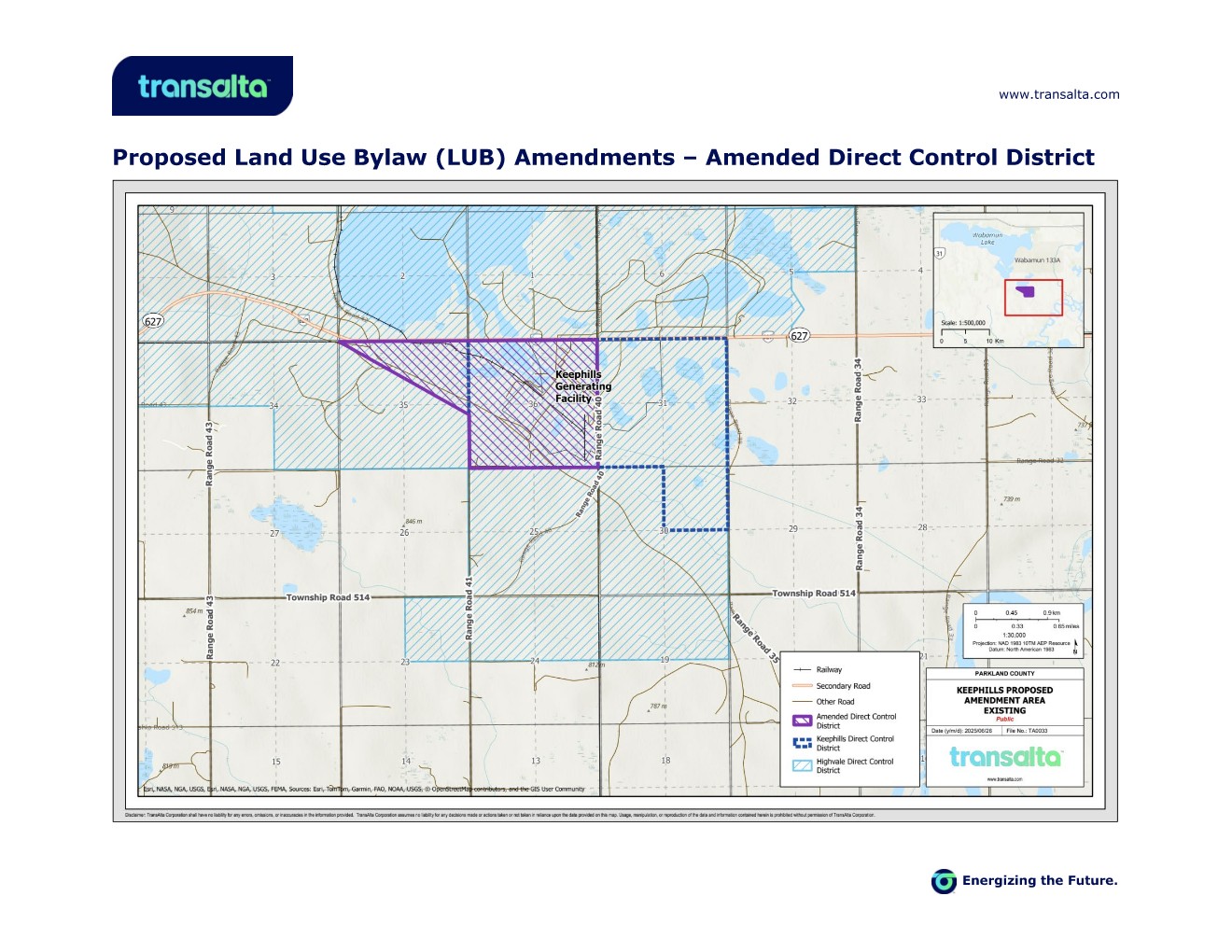
Bylaw 2025-26 Amendment to Land Use Bylaw 2025-12 Keephills Direct Control District
The finalized Bylaws are posted under the Project Documents portion of this webpage.
Purpose of the Approved Amendments
The approved amendments to the Highvale End Land Use Area Structure Plan (Bylaw 2016-12) and the County’s Land Use Bylaw (Bylaw 2025-12) allow for Data Processing Facility uses in proximity to the existing Sundance and Keephills Power Generating Stations (as shown on the maps).
Sundance Site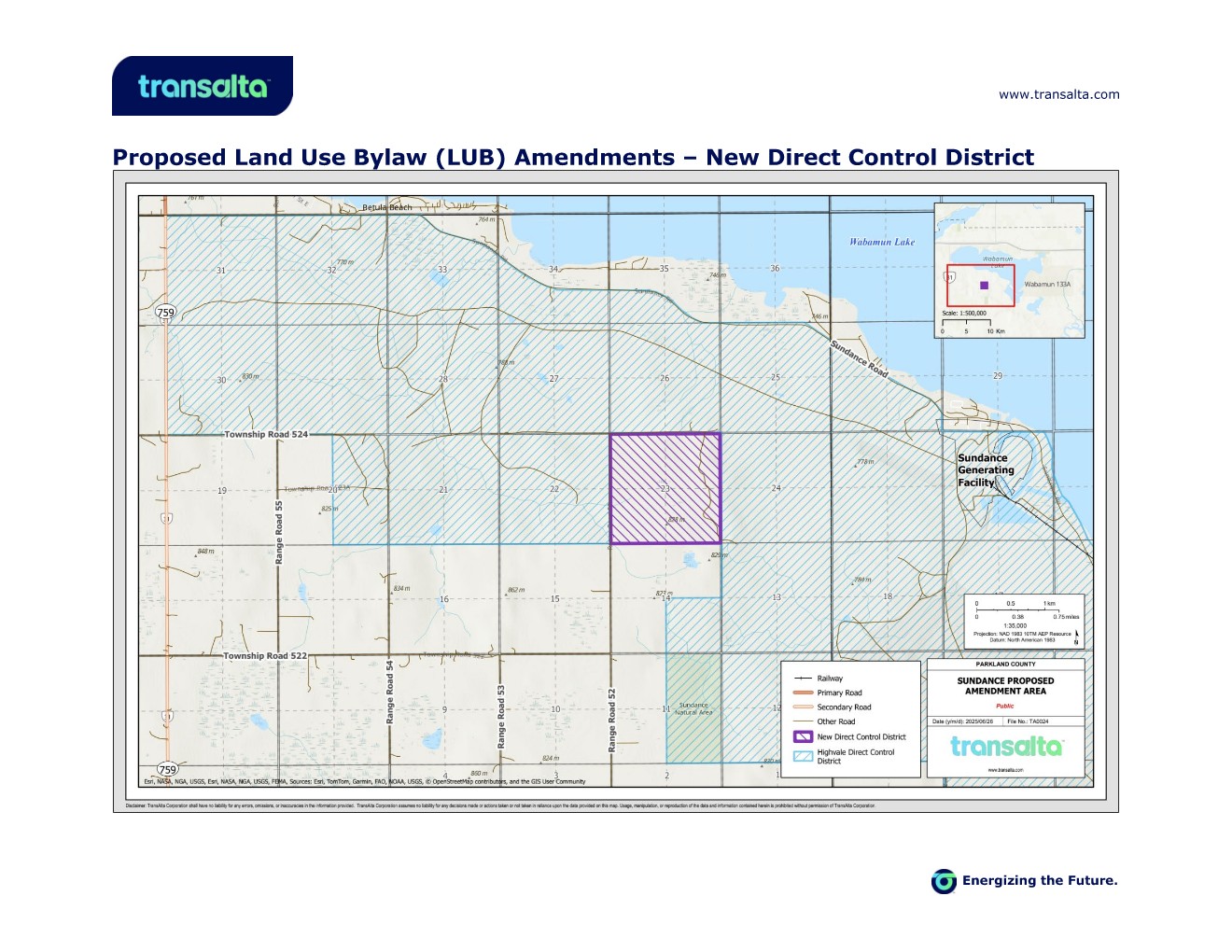 Existing Keephills Generating Station Site
New Proposed Keephills Site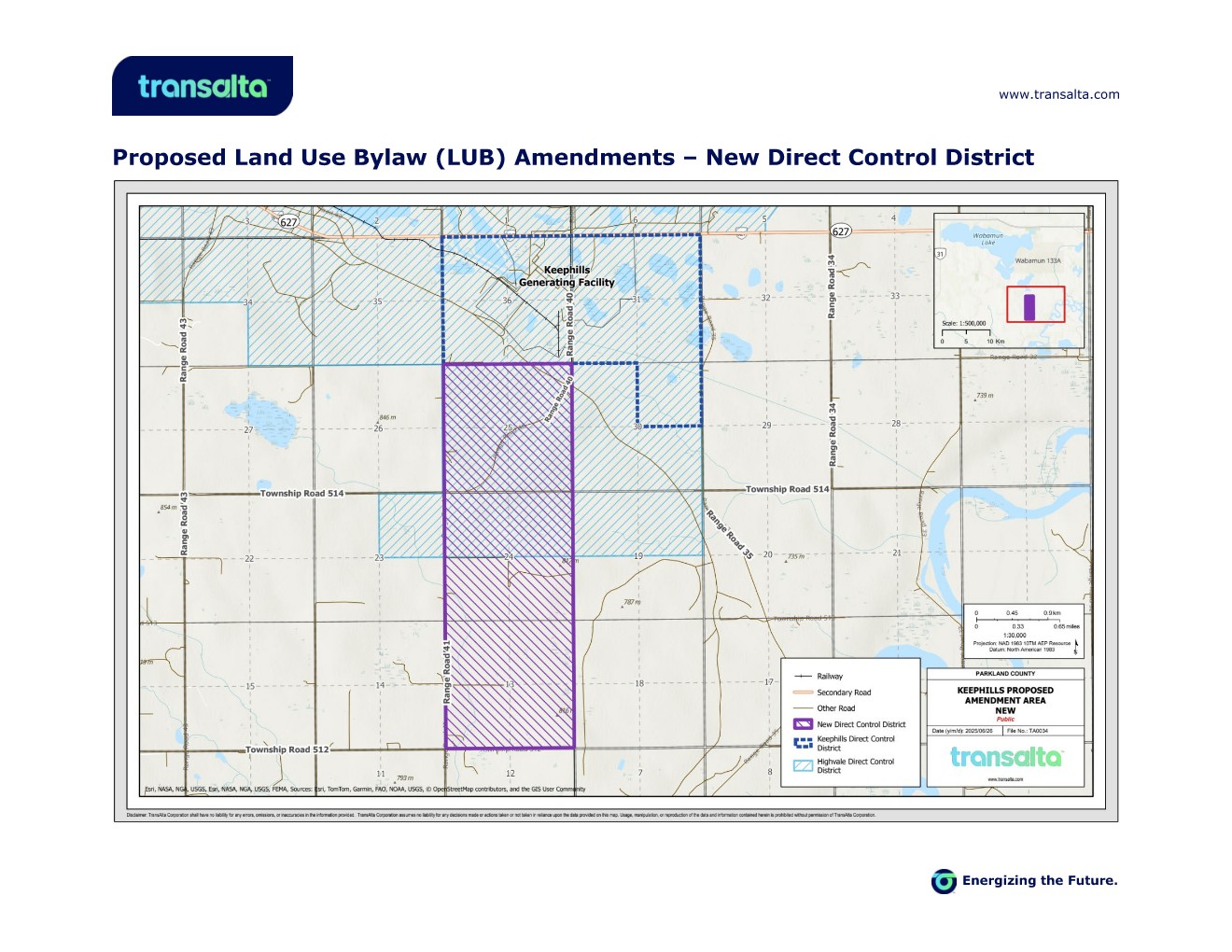
What are Data Centres?
Data centres are an emerging industrial land use that house computer systems and their components, including servers, storage systems, and telecommunications equipment. These facilities manage, store, and process the vast amounts of data that underpin our modern life and economy. Whether it’s streaming a movie, conducting an online meeting, posting on social media, or completing a credit card transaction, the operations are supported by data centres.
Data centres resemble an ordinary industrial facility from the outside; however, they are highly specialized inside, featuring robust cooling systems, extensive security measures, and cutting-edge infrastructure.
How are Data Centres Regulated?
Alberta’s Artificial Intelligence (AI) Data Centres Strategy(External link) was released in December of 2024 to illustrate the province’s commitment to attracting responsible investment into this growing sector and position our province as a global leader in data centre operations due to its natural resources, cold climate, competitive tax rates, and business-friendly regulatory environment.
Data centres employ highly efficient cooling and power systems that require water and energy consumption. Comprehensive environmental impact assessments are conducted for every project to ensure minimal ecological disruption.
Due to their complexity, every data centre built in Alberta must comply with a layered framework of Federal, Provincial, and Municipal regulations. Each body and set of regulations cover a wide range of considerations, including land use, environmental impact, building safety codes, power infrastructure, and occupational health and safety.
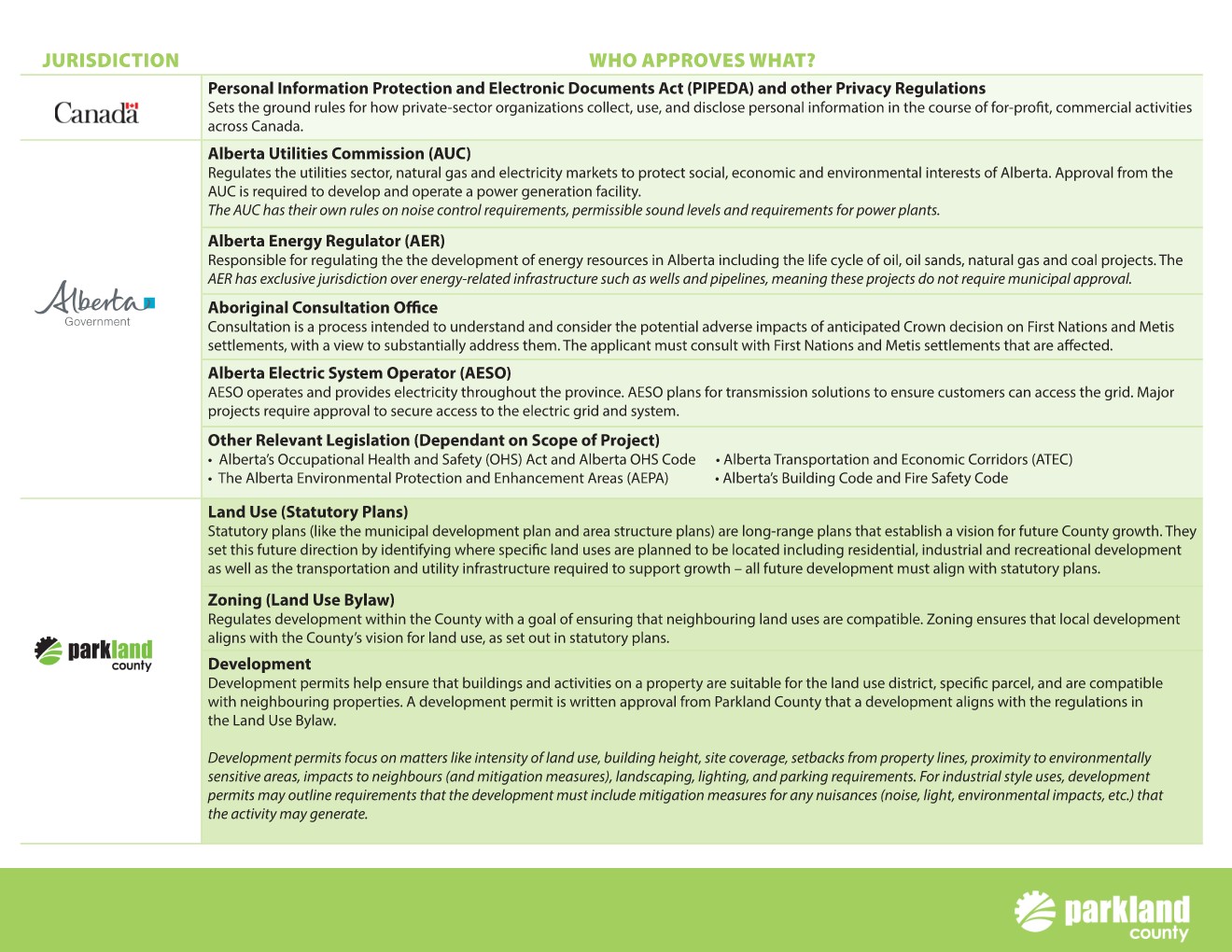
State-of-the-art security systems and comprehensive emergency response protocols are implemented to safeguard nearby residents and businesses. Strict adherence to Federal privacy regulations, such as the Personal Information Protection and Electronic Documents Act (PIPEDA), ensures the highest standards of data security.
Provincially, data centres must receive Alberta Electrical System Operator (AESO) approvals to ensure these projects do not strain the power grid. Data centres must also get approval from the Alberta Utilities Commission (AUC) to develop and operate a power generation facility. Specific Rules set out noise control requirements and permissible sound levels as well as application requirements for power plants. In addition to the above approvals, depending on the scope of the data centre, they may also require approval from several other key Provincial authorities.
Municipalities also play a critical role in regulating land use for data centres. Through statutory plans, the County sets the long-range vision for growth and development in the County and regulates specific uses in the Land Use Bylaw. Development permits reviewed and approved by the County focus on matters like intensity of land use, building height, site coverage, setbacks from property lines, proximity to environmentally sensitive areas, impacts to neighbours (and mitigation measures), landscaping, lighting, and parking requirements. For industrial style uses (like data centres), development permits may outline requirements that the development must include mitigation measures for any nuisances that the activity may generate, including:
- Noise;
- Light;
- Environmental impacts; and
- Any other nuisances.
In reviewing an application for a data centre facility, impacts on adjacent and surrounding uses and mitigation measures to eliminate or minimize these impacts must be considered by the County.
Application Status
The Bylaw Amendment applications were submitted to Parkland County on July 17, 2025. The proposed Bylaw amendments were passed by Council on September 4, 2025. Parkland County has not received applications for the development stage of the proposed Data Processing Facility at this time. To be notified of when further applications related to this project are submitted and the status of those applications. please subscribe to this webpage.
Municipal Bylaw Process
The creation or amendments to a municipal bylaw requires three Council Readings and a Public hearing at County Council. For information of the municipal bylaw process, please see the below helpful video:
Questions or Comments?
If you have any questions or comments, please contact Planning and Development Services by phone at 780-968-8888 or by email at buildingparkland@parklandcounty.com.
-
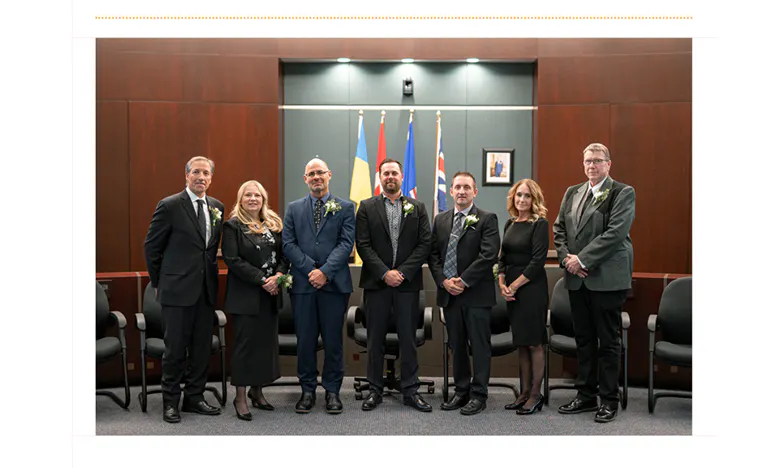
Mayor Rod Shaigec, Councillor Sally Kucher Johnson, Councillor Jason Doucette, Councillor Ben Jespersen, Councillor Corey Kyle, Councillor Kristine Olson, Councillor John McNab
-
 Bylaw 2025-22 - ASP Amendments.pdf (2.2 MB) (pdf)
-
Bylaw 2025-23 - LUB Amendment - General Regulations and New Direct Control.pdf (244 KB) (pdf)
-
Bylaw 2025-24 - LUB Amendment - Keephills New Direct Control Mapping.pdf (115 KB) (pdf)
-
Bylaw 2025-25 - LUB Amendment - Sundance New Direct Control Mapping.pdf (115 KB) (pdf)
-
Bylaw 2025-26 - LUB Amendment - Keephills Existing Direct Control Amendments and Mapping.pdf (191 KB) (pdf)
